
September 4, 2026
Plan $200–$25,000+ for Small Business Websites in 2026: Five Year Costs

Plan on $200 to $600 for a DIY SaaS build, $100 to $500 for WordPress DIY, $1,500 to $5,000 for a freelancer or template project, and $6,000 to $25,000 or more for an agency build in your first year. Add e-commerce and expect another $1,500 to $5,000 upfront, plus higher ongoing fees. Your right number depends on your available time and the revenue goals for the site.
TL;DR:
- DIY SaaS websites typically cost $200 to $600 in the first year, but are limited by platform restrictions and require roughly 15 to 40 hours of setup.
- Freelancer and agency builds can range from $1,500 to over $25,000, with additional costs for e-commerce, integrations, and content creation often doubling or tripling initial estimates.
- Ongoing costs for hosting, security, and plugins usually total between $50 and $150 per month, adding up to about $6,000 over five years, which significantly increases total ownership expense.
- Barriers like page count, custom design, complex integrations, and premium licensing can push quotes from $2,000 to well over $8,000, depending on project scope.
- Comparing quotes effectively requires clarifying project outcomes, feature lists, ownership, and support costs, plus adding a contingency of 10% to 20% for unexpected expenses.
Table of Contents
- How Much Does a Small Business Website Cost Right Now?
- Which Build Path Actually Fits Your Business?
- What Drives Your Website Quote Up?
- What Does a Website Really Cost Over Five Years?
- How Do You Compare Website Quotes Fairly?
- An Editorial Take on Website Investment
- Ready to Turn Your Website Into a Growth Engine?
- Sources
How Much Does a Small Business Website Cost Right Now?
Every budget tier covers a different level of strategy, design, and support. Here’s what your money actually buys at each level.
- DIY SaaS builder ($16 to $50/month, roughly $200 to $600 in year one): You handle setup on a platform like Wix, pay for templates and apps, and manage everything yourself. Fine for a solo operator who needs a simple landing page fast.
- WordPress DIY (roughly $100 to $500 in year one): Hosting, a premium theme, and a handful of plugins. You still do the setup work, but you own the platform outright.
- Freelancer/template build ($1,500 to $5,000): A designer builds a custom-look site on an existing framework. Median freelancer projects land closer to the $3,000 to $5,000 range.
- Agency build ($6,000 to $25,000+): Includes strategy, brand alignment, custom design, project management, and quality assurance before launch.
- E-commerce add-on: Payment gateways, shipping logic, and inventory tools typically add $1,500 to $5,000 or more to any of the paths above.
A professionally designed site generally starts around $1,500, while a barebones DIY build can technically run under $450. The gap between those two numbers is almost entirely about how much of your own time you’re willing to spend.
Which Build Path Actually Fits Your Business?
Each path trades money for time, or time for money. There’s no free option, just different currencies.
- SaaS DIY. You get hosting, templates, and basic SEO tools bundled into one monthly fee. The catch: you’re locked into that platform’s ecosystem, and switching later means rebuilding from scratch. Budget 15 to 40 hours of your own time for a simple five-page site, based on typical DIY time estimates. Timeline: a few weeks.
- WordPress DIY. More flexible than SaaS builders, but you’re responsible for hosting tiers, security patches, and plugin compatibility. Managed WordPress hosting removes some of that burden for a higher monthly fee. Typical timeline: several weeks.
- Freelancer. Hourly rates typically run $40 to $150. A five-page brochure site with basic copy integration usually falls in the $1,500 to $5,000 range depending on customization. Typical timeline: several weeks.
- Agency. You’re paying for strategy sessions, custom design, QA testing, and often staff training on the finished CMS. Many agencies also offer maintenance retainers after launch. Typical timeline: several weeks up to a few months, sometimes longer for complex builds.
Vendors advertising sub-$20-per-month “done-for-you” sites exist, but scrutinize what’s actually included, since setup fees, support limits, and ownership terms vary widely.
Pro Tip: Before you commit to any path, calculate what your own hourly time is worth. If 30 hours of DIY work costs you $1,500 in lost billable time, a freelancer at $50 an hour just became the cheaper option.
What Drives Your Website Quote Up?
Quotes rarely stay at the headline number. These are the line items that push a $2,000 estimate toward $8,000.
- Page count and custom design. Every additional page beyond a basic five-page structure adds design and content time.
- E-commerce complexity. Payment gateways, shipping calculators, and inventory syncing require setup and testing that a brochure site never touches.
- Custom integrations. CRM connections, booking systems, APIs, and single sign-on all add development hours most owners don’t anticipate.
- Content creation. Professional copywriting, photography, and video are frequently quoted separately from the build itself.
- Premium plugins and licensing. Accessibility compliance tools and paid plugin subscriptions stack up fast, and buyers routinely underestimate this category.
Budgeting 10% to 20% in contingency for these extras keeps a surprise invoice from derailing your plan.
What Does a Website Really Cost Over Five Years?
The build price is only the entry fee. Hosting, security, and plugin subscriptions keep billing you long after launch, and that’s where most budgets quietly blow up.
| Hosting tier | Typical monthly range |
|---|---|
| Shared hosting | $5 to $25 |
| Managed WordPress | $25 to $50 |
| VPS/cloud hosting | $50 to $200+ |
Add domain renewal, SSL, backups, security monitoring, and plugin subscriptions, and most small businesses land somewhere between $50 and $150 a month in ongoing costs. A professional maintenance retainer, when you want someone else handling updates and troubleshooting, typically runs higher than that baseline.
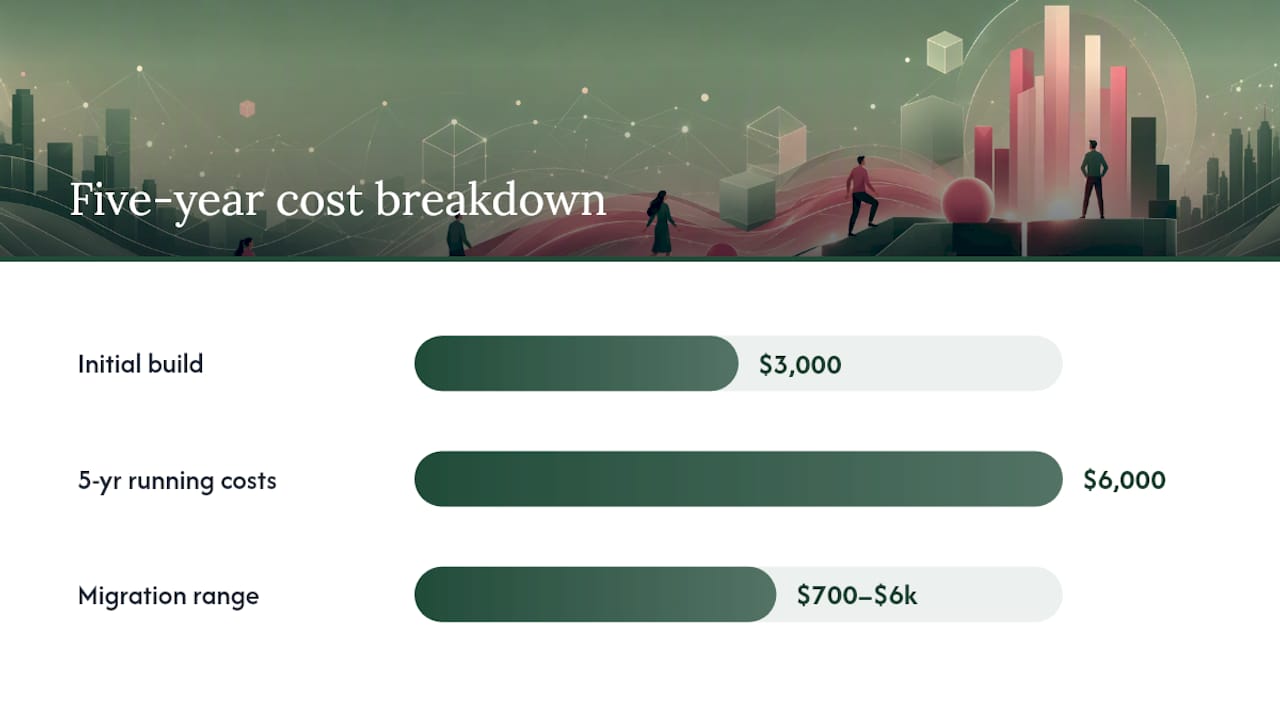
Run the math on a $3,000 build with $100 a month in running costs: that’s $6,000 in hosting and maintenance over five years, on top of the original build. The total cost of ownership often makes the initial build roughly one-third of what you’ll actually spend over five years, based on project quote datasets. Platform migrations add another risk: switching systems later frequently costs $700 to $6,000 depending on complexity, which is exactly why picking a platform you can grow with matters more than picking the cheapest one today.
How Do You Compare Website Quotes Fairly?
Three steps turn a confusing pile of quotes into an actual decision.
- Define your outcomes first. Do you need leads, sales, bookings, or just a digital business card? The answer changes which features matter.
- Map required features to each quote. List pages, integrations, CMS training, and post-launch support, then check every vendor against the same list.
- Add 10% to 20% contingency. Premium plugins, content production, and unforeseen integrations almost always cost more than the first estimate.
Before signing anything, require every quote to spell out page count, feature list, CMS platform, who owns the final assets, and what post-launch support costs. A tool like Forge can help you track vendor communication and deadlines once you’ve picked a direction.
Pro Tip: Ask directly: “If I want to leave this platform in two years, what does that cost me?” A vendor who can’t answer that question hasn’t priced your project honestly.
If speed matters more than scale, a template build gets you live faster. If you’re planning for growth, scalability and brand differentiation deserve more of your budget than a fast launch does.
An Editorial Take on Website Investment
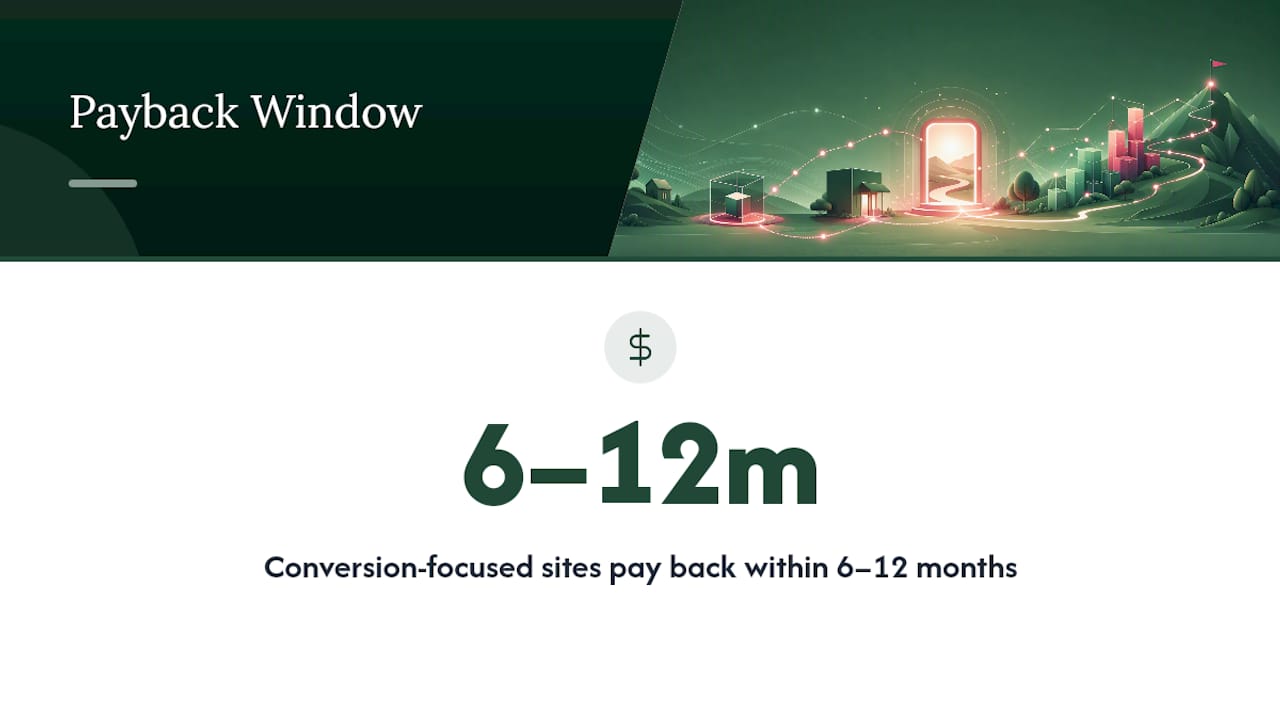
Most owners treat a website like an expense to minimize instead of an asset that pays back. A site built for conversion, paired with basic marketing, commonly pays for itself within six to twelve months. That changes the math entirely: the question isn’t “what’s the cheapest build,” it’s “what build generates the fastest return.”
[brand_signal] Connection Built specialization and regional expertise placeholders preserved verbatim.
— Chris
Ready to Turn Your Website Into a Growth Engine?
An alternative to guessing your way through vendor quotes is to scope your project against your actual growth goals before a single design decision gets made. Whether you need a project-based build, a strategic brand refresh, or ongoing marketing support through a monthly retainer, a professional team can map the investment to the budget tiers you just read about, without the surprise line items.
A discovery call gets you a clear picture of what your project actually requires: page count, integrations, content needs, and a realistic timeline, before you commit a dollar. Explore our small business marketing services to see how project builds and retainers are typically scoped, or check our service offerings for the full range of what we handle beyond the website itself. If you’re in West Michigan, our local marketing and web team can walk you through what a strategic build looks like for your market specifically. Start with a conversation about your goals, and we’ll tell you honestly what tier of investment actually makes sense.
Sources
- How much does a small business website cost? — Elementor
- How Much Does A Website Cost? (2026 Guide) — Forbes Advisor
- Small Business Website Cost 2026 — Real Pricing Data — ProjectCostEstimator
- Wix
Recommended
Want to talk it through? Start a conversation. https://connection-built.com